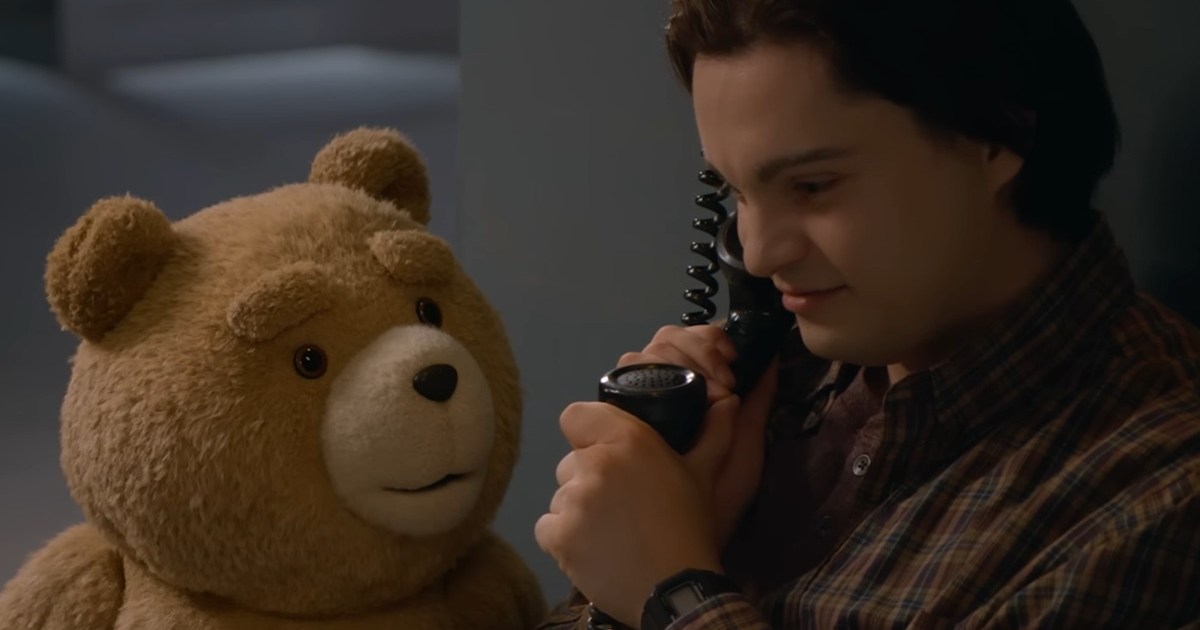
No Ted Season 3: Financial Realities Halt Live-Action Adventures
Fans of the foul-mouthed teddy bear and his best friend John Bennett have been on a roller-coaster ride since the debut of the live-action Ted prequel series. The show, which premiered on Peacock to strong viewership, has captivated audiences with its blend of irreverent humor and heartwarming moments, exploring Ted and John's formative teenage years. However, the journey for the live-action iteration is set to conclude, not with a renewal, but with a strategic pivot. Creator Seth MacFarlane has confirmed there is no plan for Ted Season 3 in its current live-action format, a decision rooted firmly in the enormous financial demands of bringing a CGI-animated bear to life on a weekly basis.
Despite critical acclaim and impressive streaming numbers – with Season 1 becoming Peacock's most-viewed original title – the cost of production proved to be an insurmountable hurdle. This revelation underscores a growing trend in the entertainment industry where even successful shows face an uphill battle against prohibitive budgets. While the live-action series may be ending, the Ted universe is far from over, preparing to embark on a new, animated chapter that promises to continue the franchise's legacy in a more sustainable way.
The Colossal Costs Behind Ted's On-Screen Magic
The primary reason for the halt on
Ted Season 3
is unequivocally financial. Industry estimates place the budget for the live-action prequel series between a staggering $8 million and $10 million per episode. To put this into perspective, many feature films operate with comparable per-minute CGI and visual effects requirements. Seth MacFarlane himself echoed the sentiments from Peacock and Universal, stating, "What I kept hearing [from Peacock and Universal] was, ‘Listen, the show is really expensive to produce, and there’s no way to do it at a lower cost.'"The immense price tag largely stems from the titular character himself. Ted, as a fully CGI-animated protagonist interacting seamlessly within a live-action environment, requires an extraordinary level of visual effects expertise and manpower. MacFarlane vividly compared the process to "doing a Marvel movie eight times a season" or an "Avengers movie every 22 minutes," highlighting the complexity of not only animating the bear but also ensuring his performance, expressions, and interactions are believable and comedic. This labor-intensive process, involving a dedicated visual effects team including Blair Clark and the crew at Framestore in Melbourne, Australia, along with the broader production team, became unsustainable for a weekly series. Even with the invaluable experience gained from producing two feature films a decade prior, the demands of episodic television proved too great for such a high-fidelity CGI character. For a deeper dive into the specific financial pressures, read our related article: Ted Season 3: Why High Production Costs Halted Live-Action.
A Deliberate Narrative Wrap-Up for the Live-Action Prequel
Understanding the financial constraints, Seth MacFarlane and his creative team, including showrunners Brad Walsh and Paul Corrigan, took a pragmatic approach to the live-action series' potential conclusion. Rather than leaving audiences with a cliffhanger that would demand a costly resolution, they crafted what could serve as a fitting series finale. MacFarlane revealed that the final scene written featured Max Burkholder's character, the teenage John Bennett, walking into a gym – a deliberate narrative bridge intended to directly connect with the first Ted film, where Mark Wahlberg portrays the adult John.
This proactive storytelling suggests a clear awareness among the creators that the show's live-action run was likely unsustainable beyond its initial order, even before an official cancellation or renewal decision from Peacock. While Peacock has yet to make a definitive statement on a third season, MacFarlane's move to provide a narrative closure speaks volumes about the behind-the-scenes realities. The creative team's ability to "paint themselves into a corner" intentionally, providing a logical progression to the established film canon, demonstrates a commitment to the franchise's overarching story, despite the format limitations. This strategic foresight ensured that fans wouldn't be left hanging, providing a satisfying conclusion to the live-action prequel arc, even if it wasn't officially labeled a "series finale."
The Animated Future: A New Chapter for Ted and John
While the live-action adventures of teenage John and Ted may be concluding, the larger Ted universe is set for an exciting continuation, albeit in a different medium. Seth MacFarlane has confirmed that a new Ted animated series is currently in production. This strategic pivot to animation directly addresses the budget issues that plagued the live-action show, offering a significantly more cost-effective and creatively flexible approach to storytelling.
Crucially, this animated series isn't another prequel. Instead, it's designed to pick up directly where the 2015 film Ted 2 left off, bridging the gap and continuing the story of adult John Bennett and Ted. In a move that will delight long-time fans, the animated series brings back the original film trio for voice roles: Mark Wahlberg returns as John Bennett, alongside Amanda Seyfried and Jessica Barth. This full-circle reunion of the core cast ensures continuity and authenticity, allowing the franchise to build upon its cinematic roots while embracing the advantages of animation.
Why Animation Is the Logical Next Step for the Ted Franchise
- Cost-Efficiency: Animation significantly reduces the astronomical costs associated with weekly, high-fidelity CGI characters in live-action settings. As MacFarlane explained, it's "certainly less complex than producing a show with an animated CGI teddy bear on a weekly basis."
- Creative Freedom: The animated format unlocks a new realm of narrative possibilities. Writers are less bound by the constraints of physical sets, realistic stunts, or complex visual effects, allowing for more outlandish, imaginative, and truly "Ted-esque" scenarios that might be prohibitively expensive or difficult to achieve in live-action.
- Original Cast Reunion: Animation allows beloved actors like Mark Wahlberg, Amanda Seyfried, and Jessica Barth to reprise their roles through voice work, without the extensive filming schedules or logistical challenges of a live-action production. This is a massive win for franchise continuity and fan engagement.
- Franchise Longevity: By adopting a more sustainable production model, the Ted franchise can potentially enjoy a much longer and more consistent future, allowing for more seasons and deeper exploration of its characters and humor.
The transition to animation is a smart strategic move, ensuring that the beloved characters and unique brand of humor can continue to entertain audiences without being derailed by budgetary constraints. For more details on this exciting development, check out: Ted's Future: Animated Series to Replace Costly Live-Action Show.
Navigating the Future of Fan Favorites in a Shifting Media Landscape
The decision to not move forward with
Ted Season 3
in live-action is indicative of a broader trend in the streaming industry. As competition intensifies and content budgets come under closer scrutiny, streaming platforms are increasingly making strategic decisions to prioritize cost-effective content that still resonates with audiences. Even wildly popular shows are not immune to these financial realities, especially when they involve complex and expensive production techniques like advanced CGI characters.For fans, this shift can initially be disappointing, as the live-action series brought a tangible presence to the Ted universe. However, it also presents an opportunity. Seth MacFarlane has a storied history and immense success in animation, having created iconic shows like Family Guy, American Dad!, and The Cleveland Show. His expertise in the animated medium, combined with the return of the original film cast, bodes well for the quality and authenticity of the upcoming animated series. Fans can anticipate the same irreverent humor, character dynamics, and unique storytelling that defined the films, now delivered through a format that allows for greater creative freedom and long-term viability.
Ultimately, the pivot to animation for the Ted franchise is a testament to the creators' and studio's commitment to keeping the story alive. It's a pragmatic solution that ensures the enduring legacy of Ted and John can continue to evolve and entertain without being hindered by the unsustainable demands of live-action CGI production.
Conclusion
The news is clear: there is no plan for Ted Season 3 in its live-action form. This decision, confirmed by creator Seth MacFarlane, stems directly from the astronomical production costs of bringing the CGI-animated bear to life on a weekly basis. Despite the live-action prequel's strong performance on Peacock, the estimated $8-10 million per episode budget proved unsustainable. However, this is not the end for the beloved franchise. Instead, the Ted universe is set to expand with a new animated series, picking up after Ted 2 and featuring the return of original film stars Mark Wahlberg, Amanda Seyfried, and Jessica Barth in voice roles. This strategic shift to animation promises a more cost-effective and creatively flexible future, ensuring that Ted's irreverent humor and John's adventures will continue for years to come, albeit in a vibrant new format.